Building a home along Florida’s 30A isn’t just about design, location, or finishes.
It’s about what’s happening behind the walls.
In a coastal environment like ours — with constant humidity, salt air, and driving rain — moisture is the single biggest threat to a home’s long-term durability.
And yet, it’s also the part most homeowners never see.
At Grahame Family Homes, we take a different approach.
We don’t just build beautiful homes.
We build high-performance homes designed to handle the 30A climate.
Why Moisture Control Matters More on 30A
The conditions along 30A are unique:
- high humidity year-round
- salt air that accelerates corrosion
- frequent storms and heavy rain
- intense sun exposure
Even a small amount of water intrusion can lead to:
- mold and mildew
- wood rot
- structural damage over time
That’s why moisture protection isn’t optional — it’s foundational.
The System Behind the Walls: ZIP System Sheathing
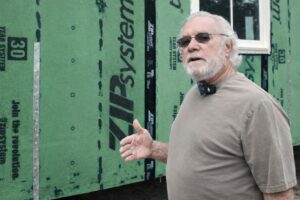
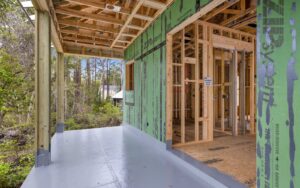
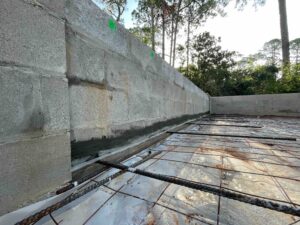
On this home, we’re using the ZIP System, which combines structural sheathing and a built-in weather-resistant barrier into one high-performance product.
Unlike traditional systems that rely on multiple layers, the ZIP System:
- reduces the risk of installation errors
- creates a more consistent moisture barrier
- improves air sealing across the entire structure
It’s a cleaner, more controlled way to build — especially in a coastal environment.
Sealing the Weak Points: Flashing Tape
Water rarely enters through large, flat surfaces.
It finds its way in through:
- seams
- edges
- joints
That’s why we take extra care at every connection point.
We use ZIP System flashing tape to seal all panel seams, ensuring:
- joints are protected from moisture intrusion
- the wall system acts as a continuous air barrier
This step is critical — and often overlooked in standard construction.
The Detail That Makes the Difference: Liquid Flashing
Some areas can’t be fully sealed with tape alone.
That’s where liquid flashing comes in.
We apply it to:
- nail penetrations
- irregular openings
- hard-to-reach connection points
This creates a fully sealed surface that:
- blocks moisture at its most vulnerable entry points
- protects metal fasteners from corrosion (especially important in salt air environments)
Creating a Complete Drainage Plane
All of these elements work together to create what’s called a drainage plane behind the exterior cladding.
In simple terms:
if any moisture gets behind the siding, it has a controlled path to escape — without damaging the structure.
This is one of the most important (and least visible) parts of a well-built coastal home.
Building Beyond Code
Here’s the key difference:
What we’re describing here is not required by code
But it’s required if you want a home that:
- lasts longer
- performs better
- requires less maintenance over time
At Grahame Family Homes, we believe details like these are what separate a house from a well-built home.
Why This Matters for You
Most homeowners focus on:
- finishes
- layouts
- design details
But the real value of your home comes from:
how well it’s built where you can’t see it
Because that’s what determines:
- long-term durability
- maintenance costs
- overall home performance
Watch the Process
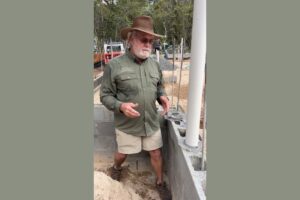
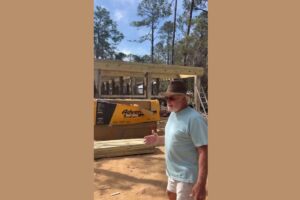
In this video, Tony walks through exactly how we install and seal our wall system using ZIP sheathing, flashing tape, and liquid flashing.
Let’s Build It the Right Way
If you’re planning to build on 30A, choosing the right builder means understanding how your home will perform — not just how it will look.
At Grahame Family Homes, we focus on:
- building beyond code
- using proven systems
- and delivering homes designed for this environment